
A Welsh Schoolboy Remembers
Ruston Bucyrus Cranes & Excavators on Swansea Building Sites
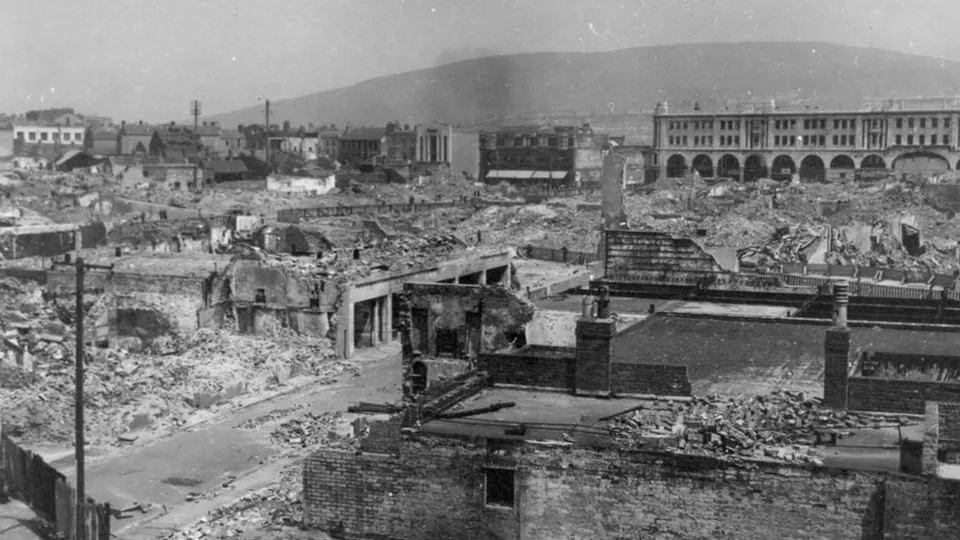
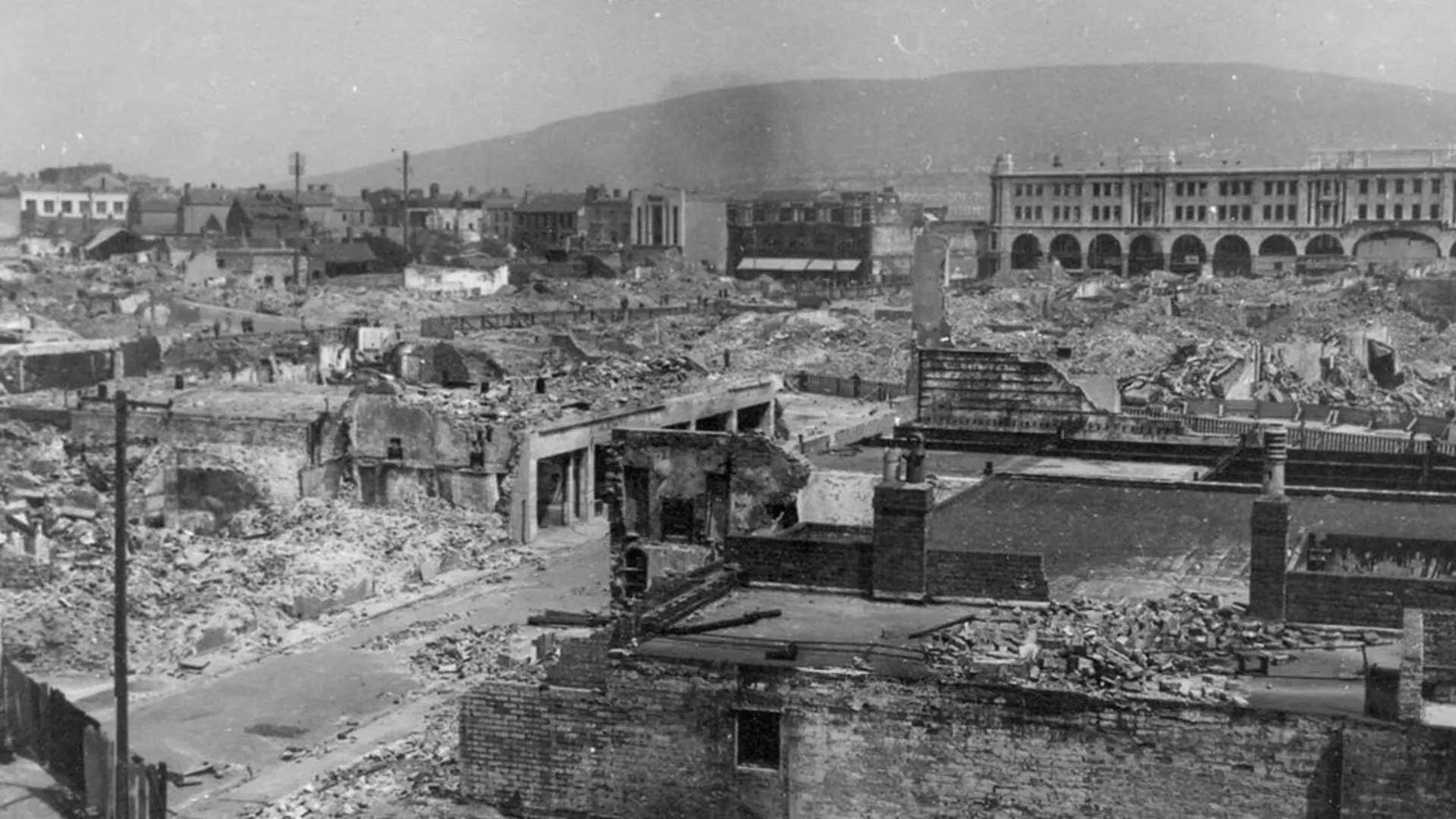
Swansea town centre in the aftermath of bombing. Picture by kind permission of West Glamorgan Archive Service.
The town that burned
Hello and Greetings from my long ago days of boyhood; days of yore when machinery mechanics roamed the land fixing diggers, bulldozers, tipper trucks and anything else wot’ needed fixin’.
I have a story to tell of a different way of life; born into the war torn town of Swansea in 1943 and one of the most exciting periods in our country’s existence. Born on that fateful night in the West Cross district a few miles around the sweep of the bay, where forty acres had been plundered by Hitler’s Luftwaffe leaving devastation in their wake; a once thriving town centre razed to the ground on the last of the night raids lit up the town watched by the west end population as it burned.
Digger watching
For mechanically minded schoolboys in the years following, when they started to rebuild, it became the best of times because of all the machinery that the task of renewal involved.
The particular machinery which grabbed our attention along with the general public was the mechanical excavator or digger by which it became more popularly known. They could be found anywhere; in the town centre, outlying districts or country field as they dug foundation ditches and trenches within sight of fascinated onlookers watching ropes coiling and uncoiling to work the arms poking out of the front capturing the dirt with the machine turning to dump into a fleet of waiting tipper trucks taking it away to fill the seemingly insatiable appetites of other hungry holes waiting to be fed.
One machine became more familiar than the others because it had enough space to stand behind the man operating it. Manufactured by Ruston Bucyrus in their Lincoln factory and if you hang around I am going to take you there!
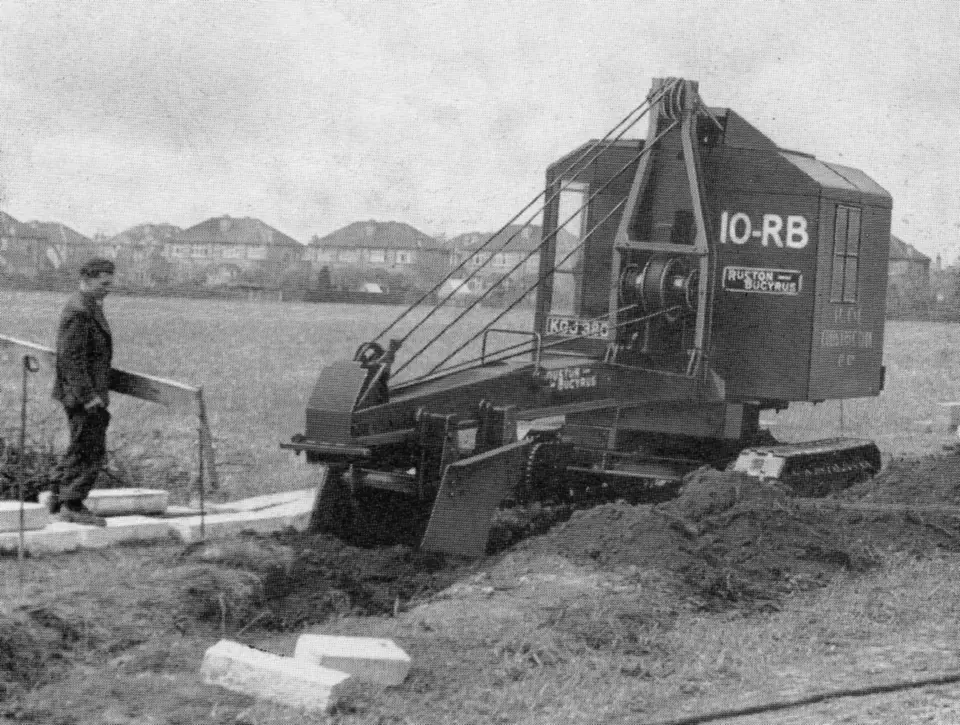
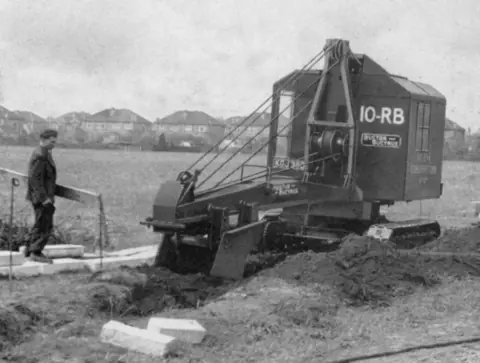
Seen on building sites throughout post war Britain by the general public as they rebuilt our country from the havoc of wartime bombing by Hitler’s Luftwaffe. The machine above is equipped with the versatile skimmer scoop bucket ideal for road levelling and distinguishable by the front mounted equipment frame also used when working with backacter/dragshovel for trenching operations. Digger watching was a national pastime for both schoolboys and general public.
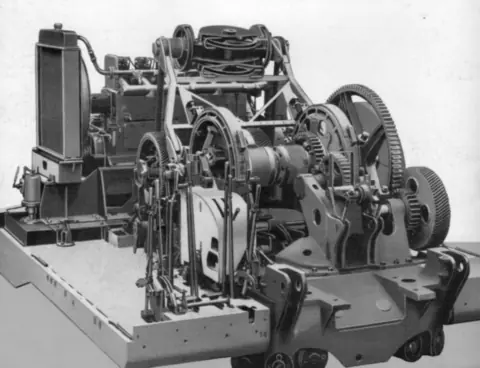
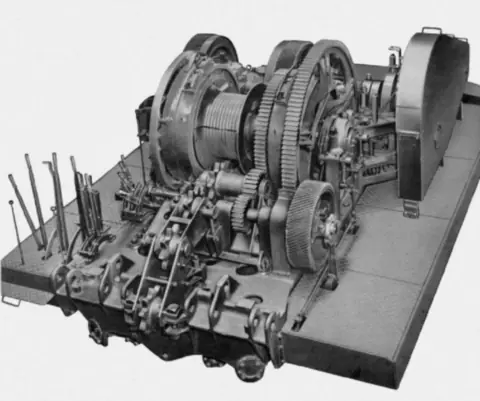
Surely one of the cleverest machines ever invented, crammed with endless mechanisms that made them work:
Lever and latchfor dirt to dispatch,bell cranks that rangwhile the gears all sang,with brake bands that squealedas the ropes outward reeled.
The poetry of it all was enough to turn any aspiring young engineer’s head.
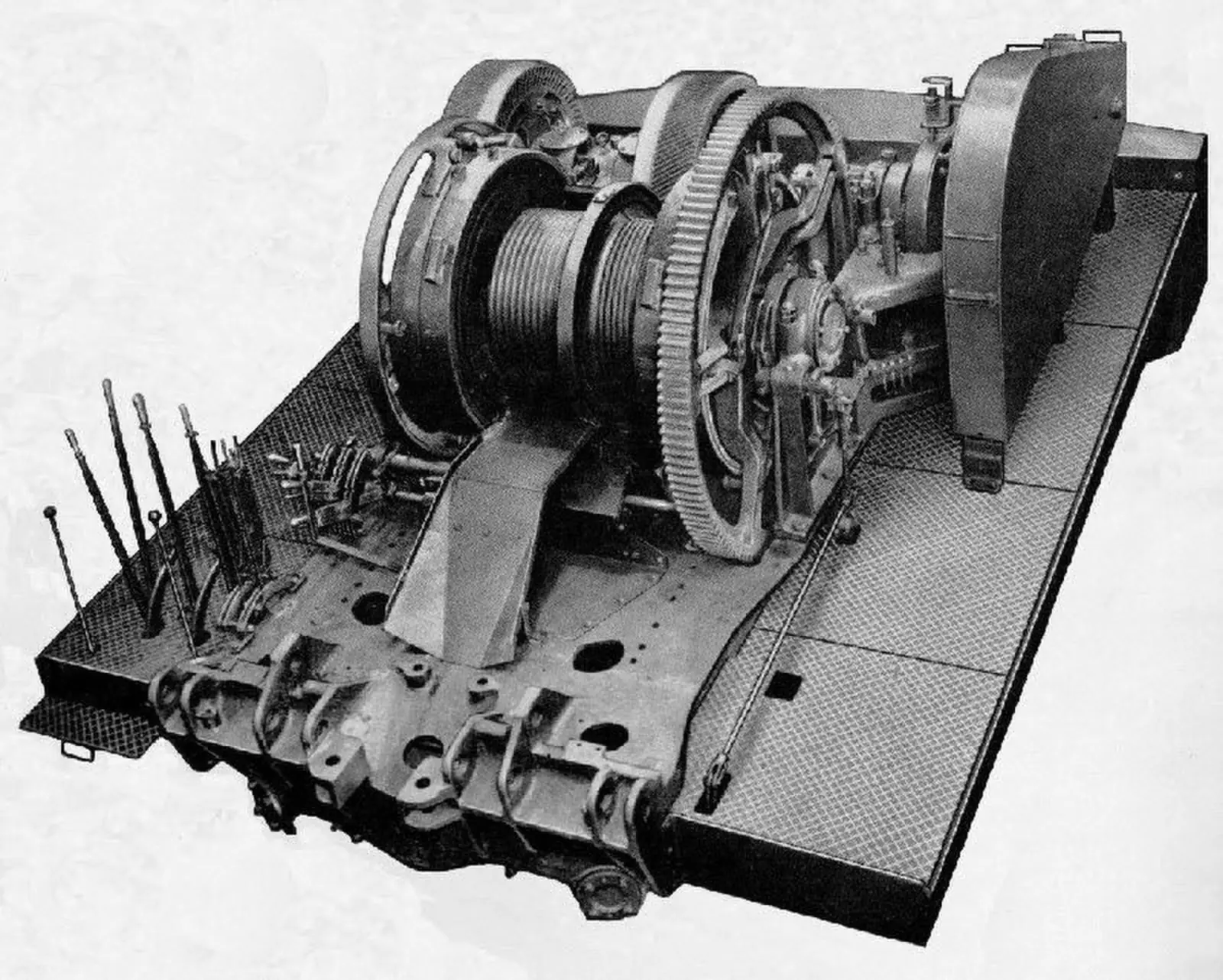
Found in all sorts of places, town or country field, mechanical diggers were all motion accomplishing constantly progressing purpose until their task complete; the driver casually pulling levers while their machine did all the work.
I made friends with a lot of digger drivers; many of them ex service men glad to have survived battle and come home to help build a new country.
I was privileged to have known them and we’ll get to talk to a few on our journey around South Wales building sites.
The 10-RB skimmer scoop
With its continental style box like cab the most recognisable and easily identified digger to hypnotize 1950s building site watchers must surely have been the Ruston Bucyrus 10-RB. Mostly it seemed to me at the time just a schoolboy becoming aware of such things, for digging up and grading roads with what was called a skimmer scoop.
As illustrated in the picture above it was a boxy sort of bucket with teeth mounted on wheels and pulled along the digging arm by a cable when set horizontal with the road. Lifted clear on reaching the end of its travel the whole machine then swung around to drop the rubble into a waiting lorry.
This was the most interesting part because to discharge the contents, the driver pulled a rope from up inside the cab, and the floor of the box swung open. We, the spectators, watched this action time and time again totally mesmerized by the rope pulleys constantly turning first one way and then the other as the digging arm was lifted up and down and the box floor flipped open.
Re-closing it was a dramatic event on its own, accomplished with a final flourish as the bucket was allowed to run free a short distance down the lifted digging arm before sudden brake application caused the floor to swing up into the keep latch and snap shut with a satisfying little clunk.
For digging foundations and utility trenches the 10-RB’ converted to a drag shovel, also known as a backactor, another crowd pleaser although not as exciting and slower in operation. Audiences watched as trenches grew deeper and longer with every bite, the bucket eating its fill and the drag and hoist ropes seeming to have a tug of war before finally lifting out of the trench to discharge spoil into a waiting lorry.
Follow me to Lincoln
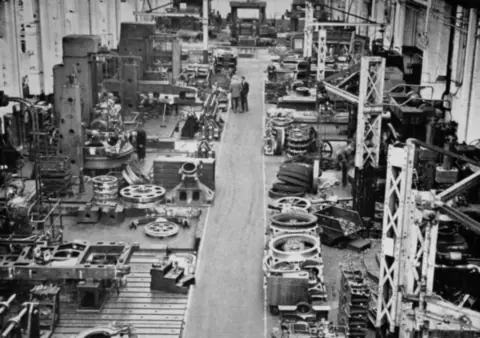
So follow me around a few projects of the time, we’ll have a chat with some of the drivers and then off to Swansea High Street Railway Station for my steam train journey to Lincoln and the Cathedral high machine and erecting shops of Ruston Bucyrus at their Beevor Street factory.
It’s the 1960’s; Rock & Roll, Beatle mania and all that. We’ll see a lot of action as they put things together, maybe have a few laughs on the way as we nip down to London for a weekend and pop into some guitar shops and the famous 2’Is Coffee bar in Wardour Street.
This is both a tribute to those times, the days of our youth and a salute to the industry of which we were a part along with the people I was lucky enough to work with. So bring some spanners and I’ll introduce you to a few of them along the way.
Geoff Lewis
Going to press
Marks & Spencer in Oxford Street has just closed. I was there standing behind the 22-RB crane driver when they hoisted the girders into place in 1952 and again some years later when it caught fire. Didn’t you know about that?